みずほ賞 The Mizuho Award
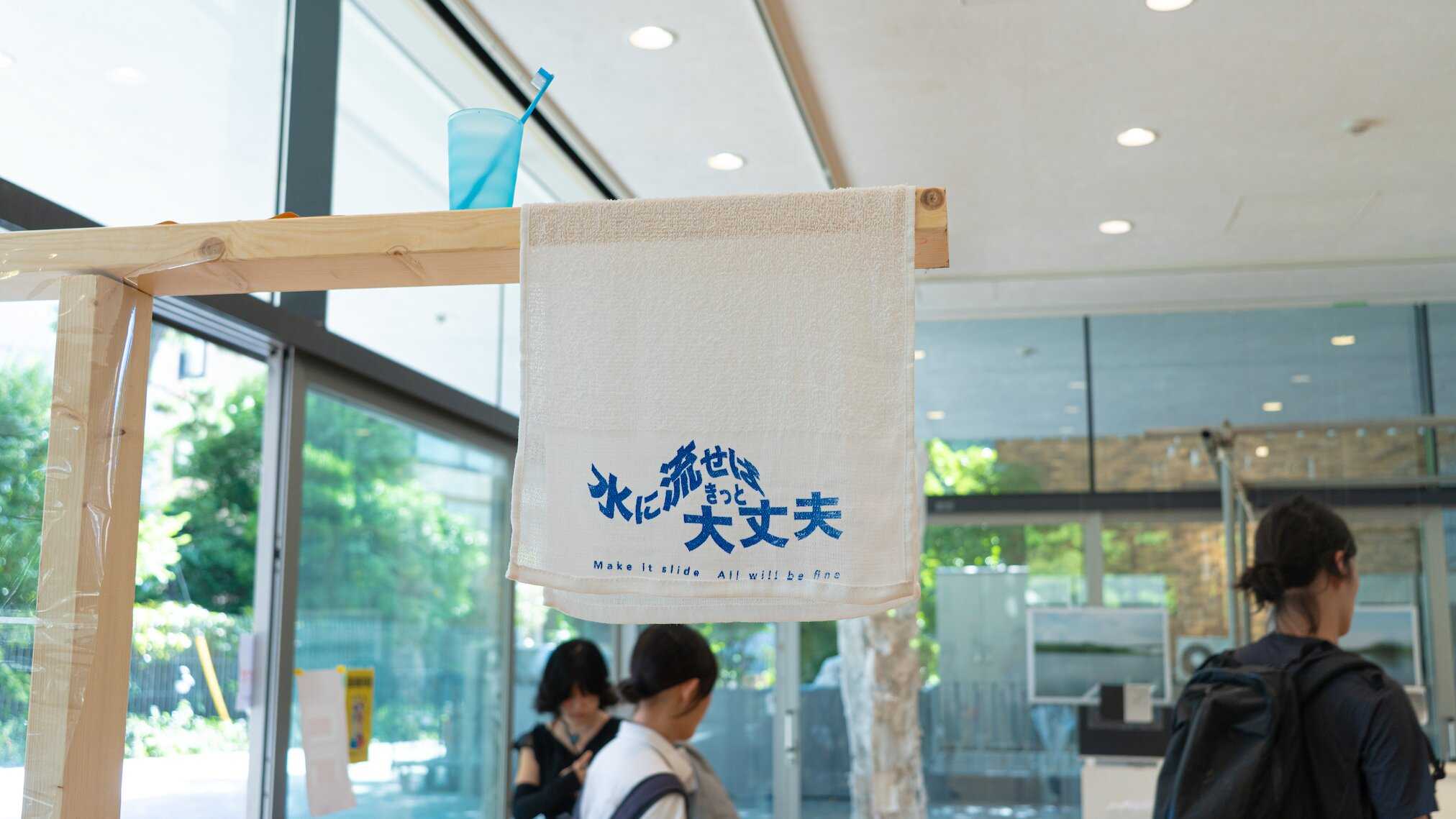
水に流せばきっと大丈夫
Make it slide All will be fine
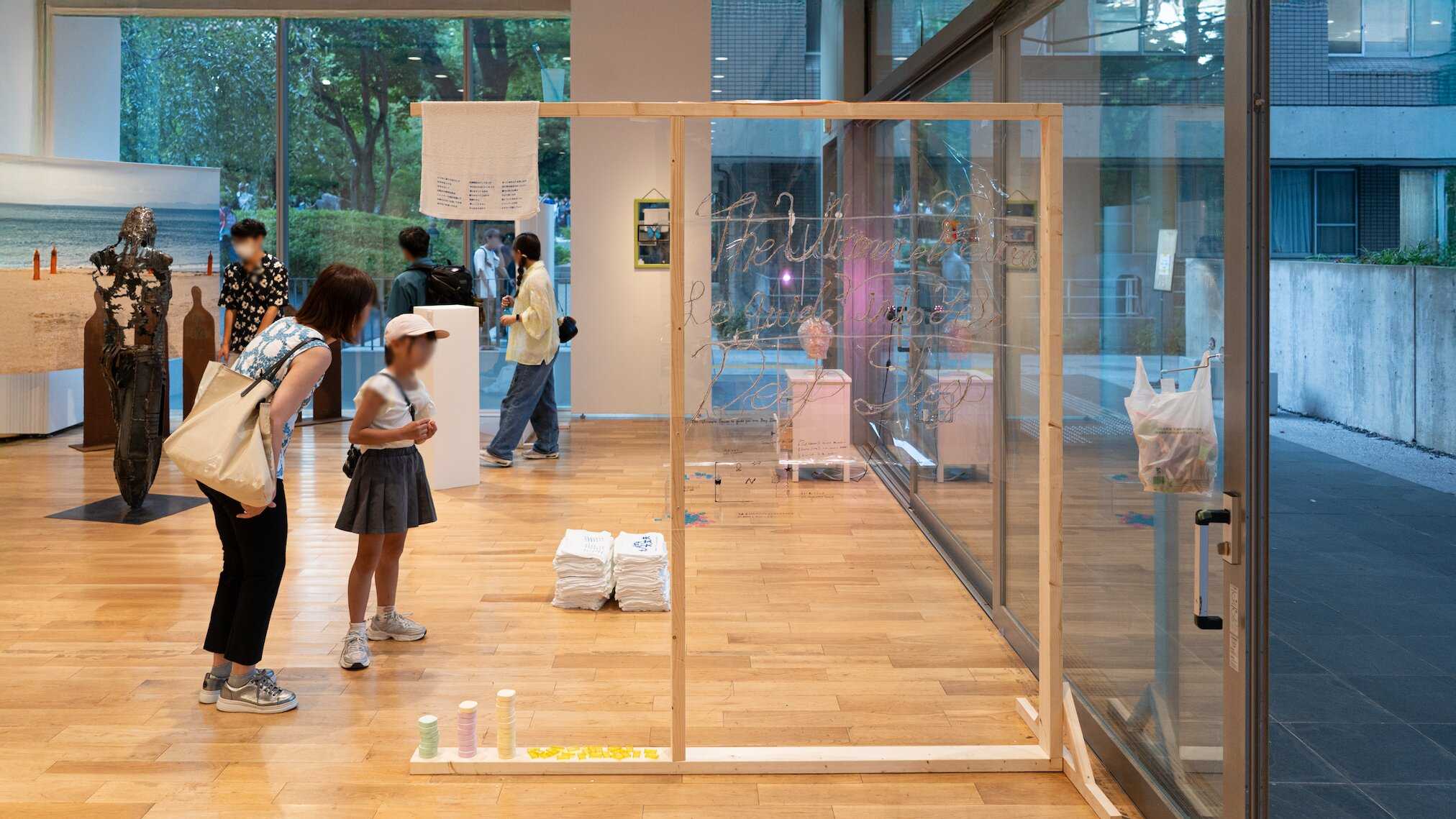
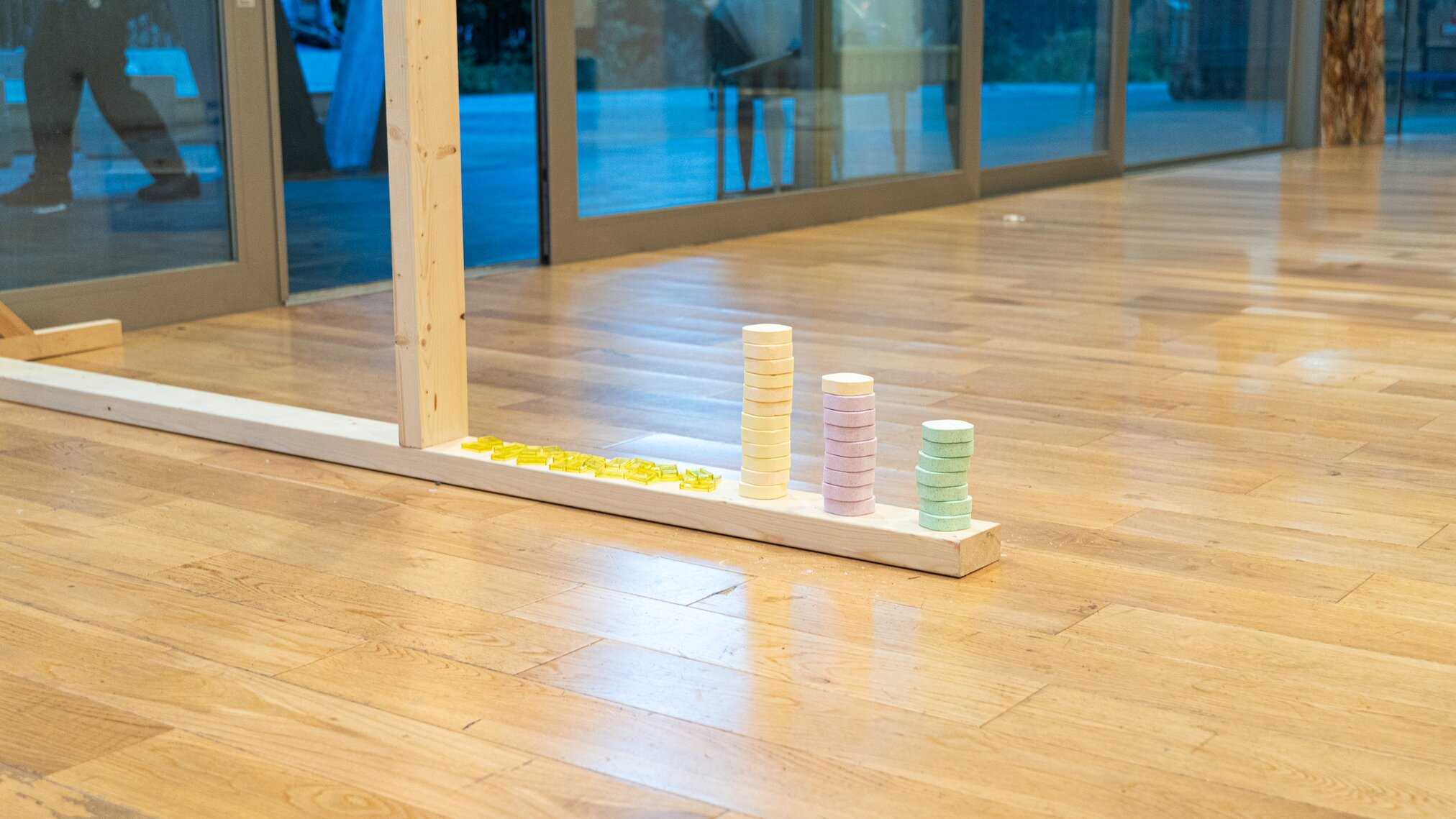
- 素材 / Material(s): タオル、歯ブラシ、バブ(入浴剤) / Towel, Toothbrush, Bath additive “Babu”
- サイズ / Size: H10mm×W300mm × D750 mm
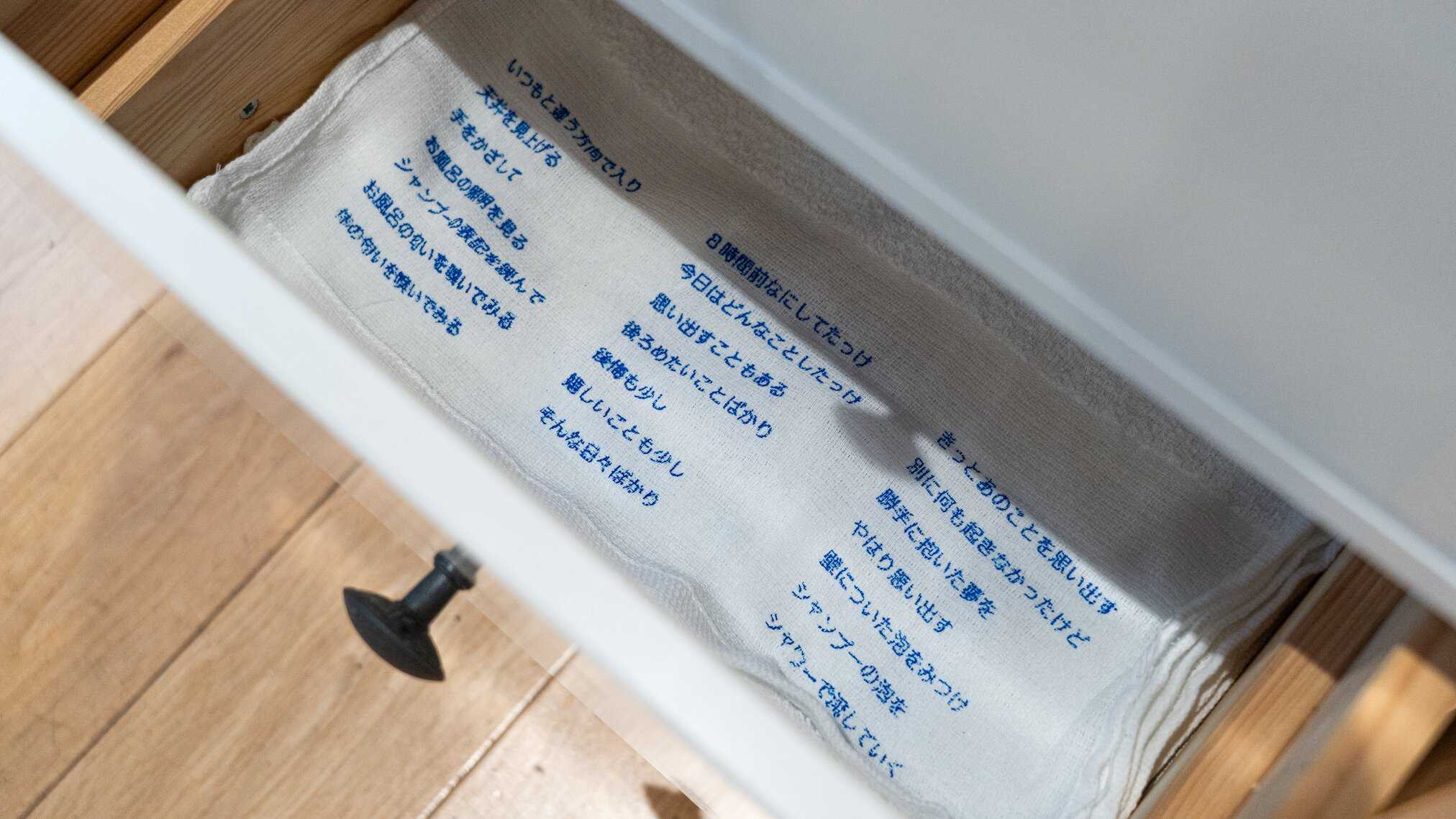
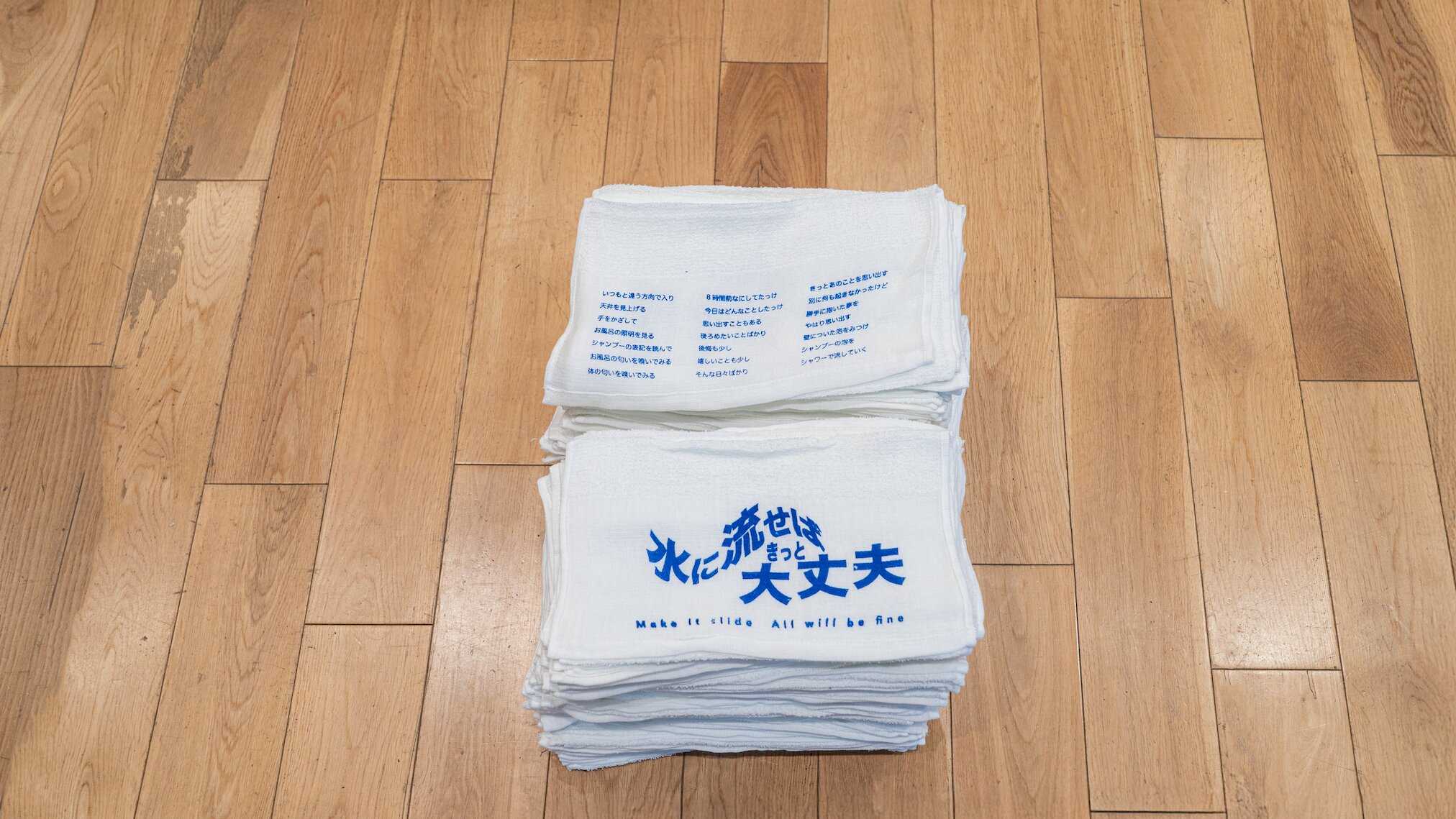
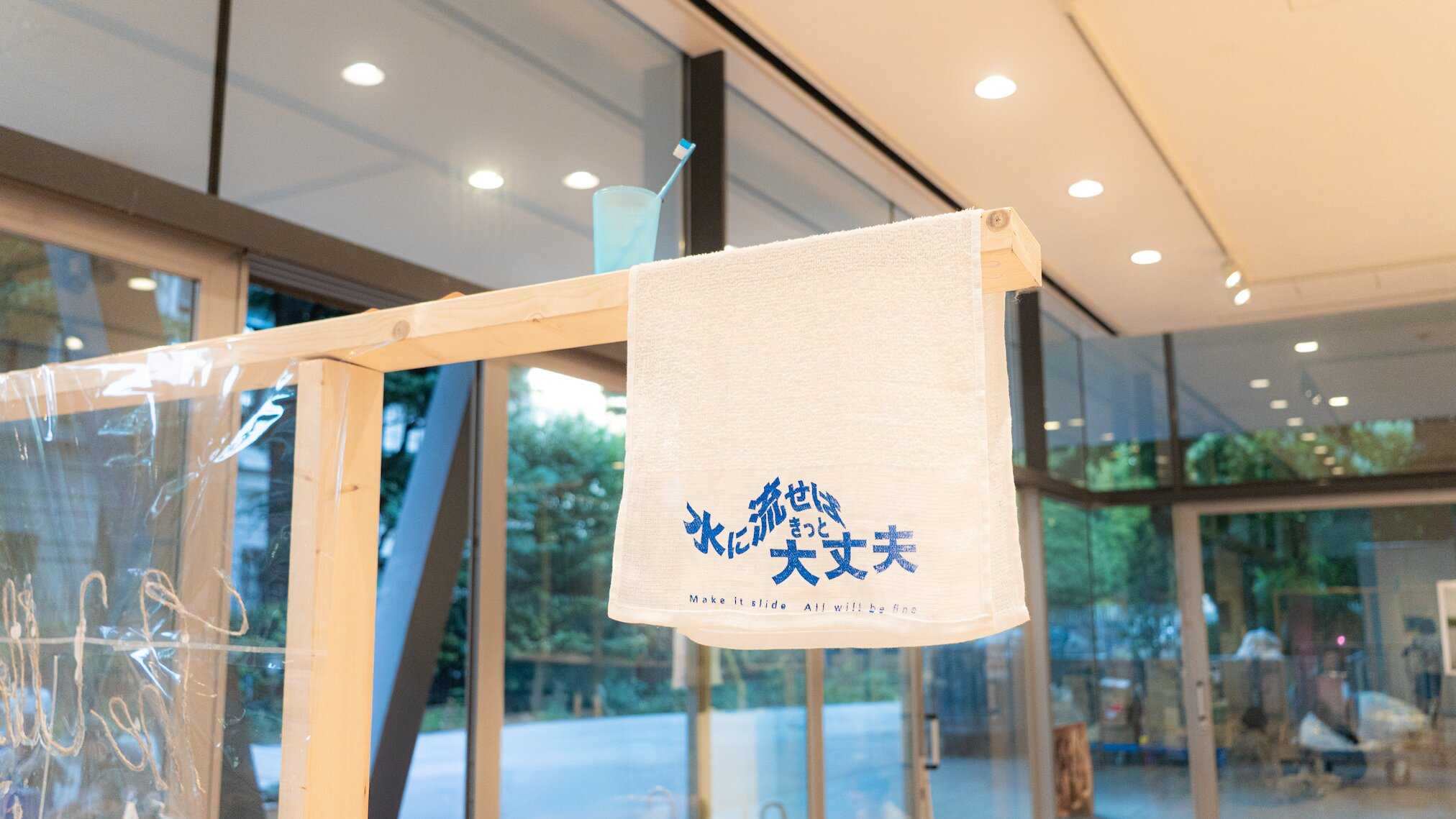
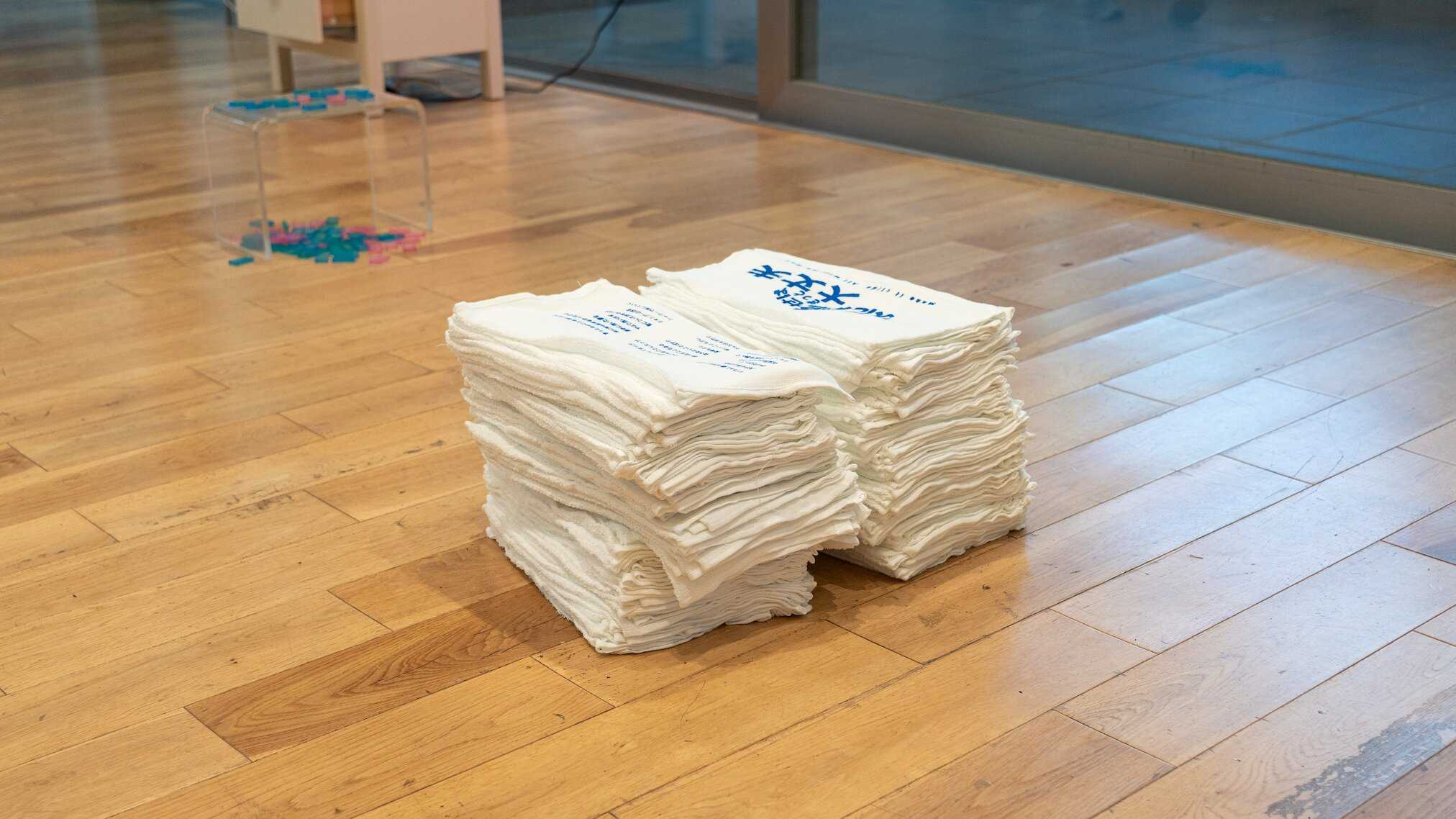
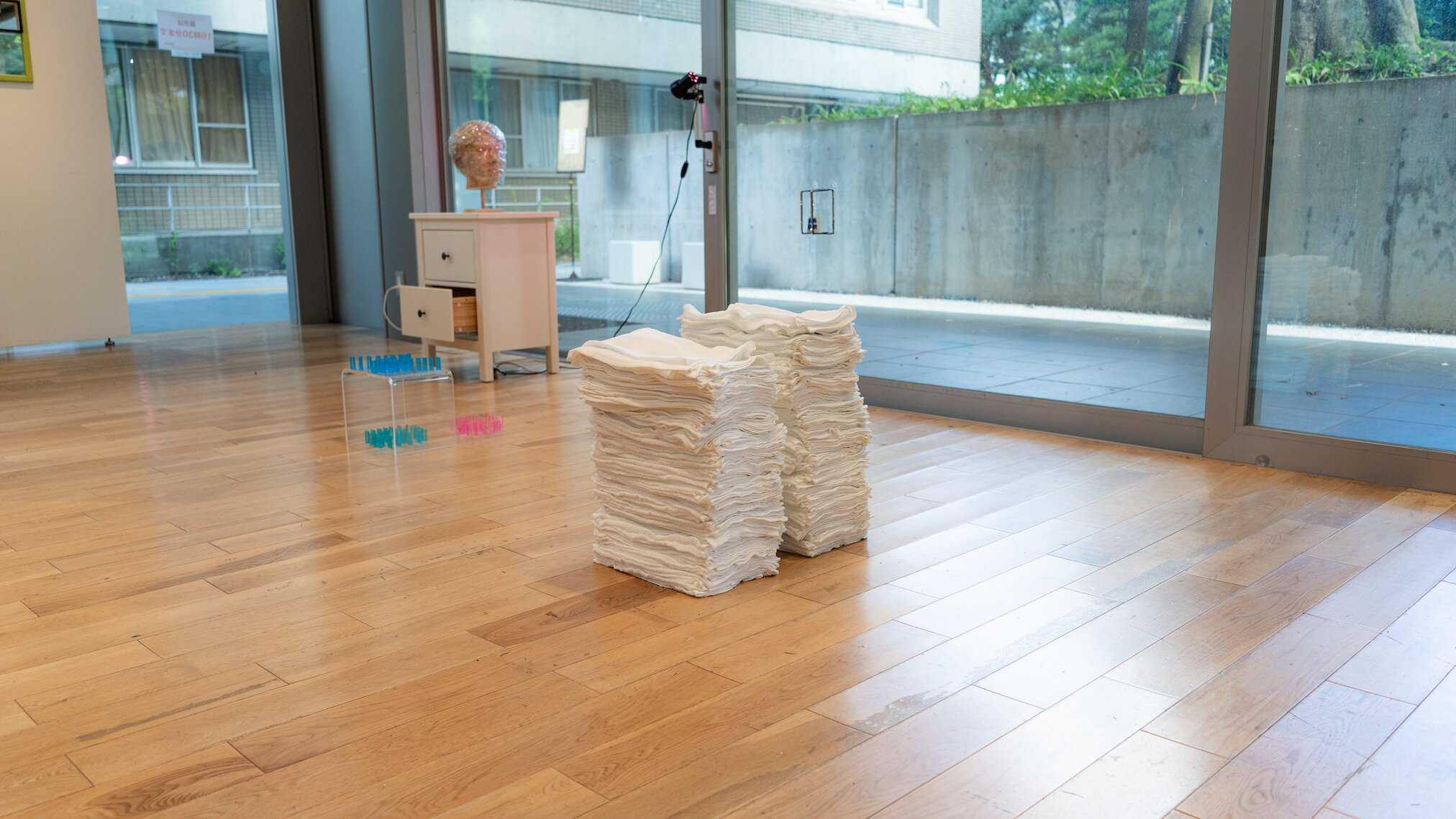
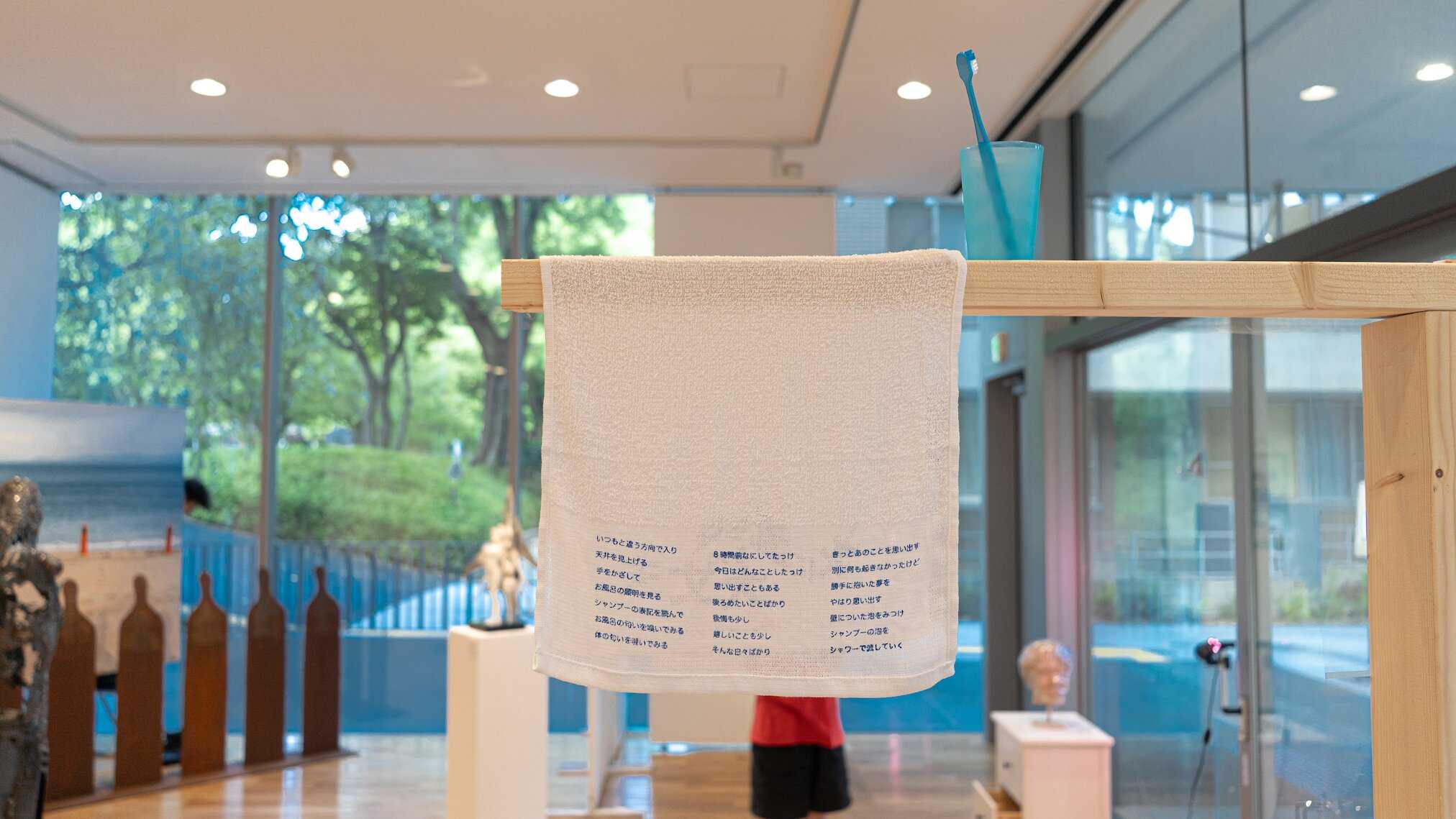
本作は、日本の温泉や銭湯文化に付随してきた、広告物としてのタオルという存在から出発している。浴場や粗品として配られる薄手の白いタオルには企業名や屋号が印刷され、身体を拭く道具であると同時に、入浴中にふと目に入る読み物として機能してきた。本作では、その広告的な言葉の位置に「水に流せばきっと大丈夫」という詩を刷り込み、約300枚のタオルを山積みにして展示した。入口には干されたタオルや入浴剤など、入浴を連想させるモチーフがインスタレーションとして構成され、香りと視覚を通して浴室を想起させる空間が立ち上がる。鑑賞者はタオルを持ち帰り、家庭や浴室という私的な空間で使用することで、思考が緩む入浴の時間の中で言葉と再会する。使い続けるうちに印字は薄れ、やがて消えていく。その過程は、作品が保存される物ではなく、生活の中で時間とともに変化しながら未来へ手渡されていく存在であることを示している。
This work begins with the towel as an advertising medium historically associated with Japanese hot springs and public bathhouses. Thin white towels distributed at baths or given as soshina(means small gift) often bear company names or shop logos, functioning not only as tools for the body but also as casual reading material glimpsed during bathing. In this work, the space normally reserved for advertising text is replaced with the phrase “If you let it wash away, it will surely be alright,” printed onto each towel. Approximately 300 towels are piled in the exhibition space. At the entrance, hung towels and bath salts are arranged as an installation, and through scent and visual cues, the space evokes the atmosphere of a bathroom. Visitors are free to take a towel home and use it in their own private spaces, encountering the words again during the mentally relaxed time of bathing. As the towel is repeatedly used, the printed text gradually fades and eventually disappears. This process suggests a work that is not preserved as a static object, but one that changes over time and is quietly passed into the future through everyday life.
ガブリムス/長谷川慶
GABURIMUSU / KEI HASEGAWA
2004年埼玉県生まれ。東京藝術大学美術学部先端芸術表現科在学。人が集い、関係ができては解体される仮設的な時空間を扱い、空間や物、行為をわずかにずらすことで、鑑賞者が自身の身体や時間、距離に気づいてしまう状況を立ち上げる。主なメディアはインスタレーション、プロジェクト、写真。強いメッセージや明確な結論を提示するのではなく、鑑賞体験後も説明しきれない違和感や余韻が生活に残り続ける状態を重視している。
Born in Saitama, Japan in 2004. Currently studying in the Department of Intermedia Art, Faculty of Fine Arts, Tokyo University of the Arts. Working with provisional spaces in which people gather, form relationships, and disperse, the artist subtly shifts space, objects, and actions to create situations that make viewers aware of their own bodies, sense of time, and distance. Primary media include installation, projects, and photography. Rather than presenting strong messages or clear conclusions, the work values states in which unarticulated discomfort and lingering afterimages continue into everyday life.